Sunday, November 15, 2020

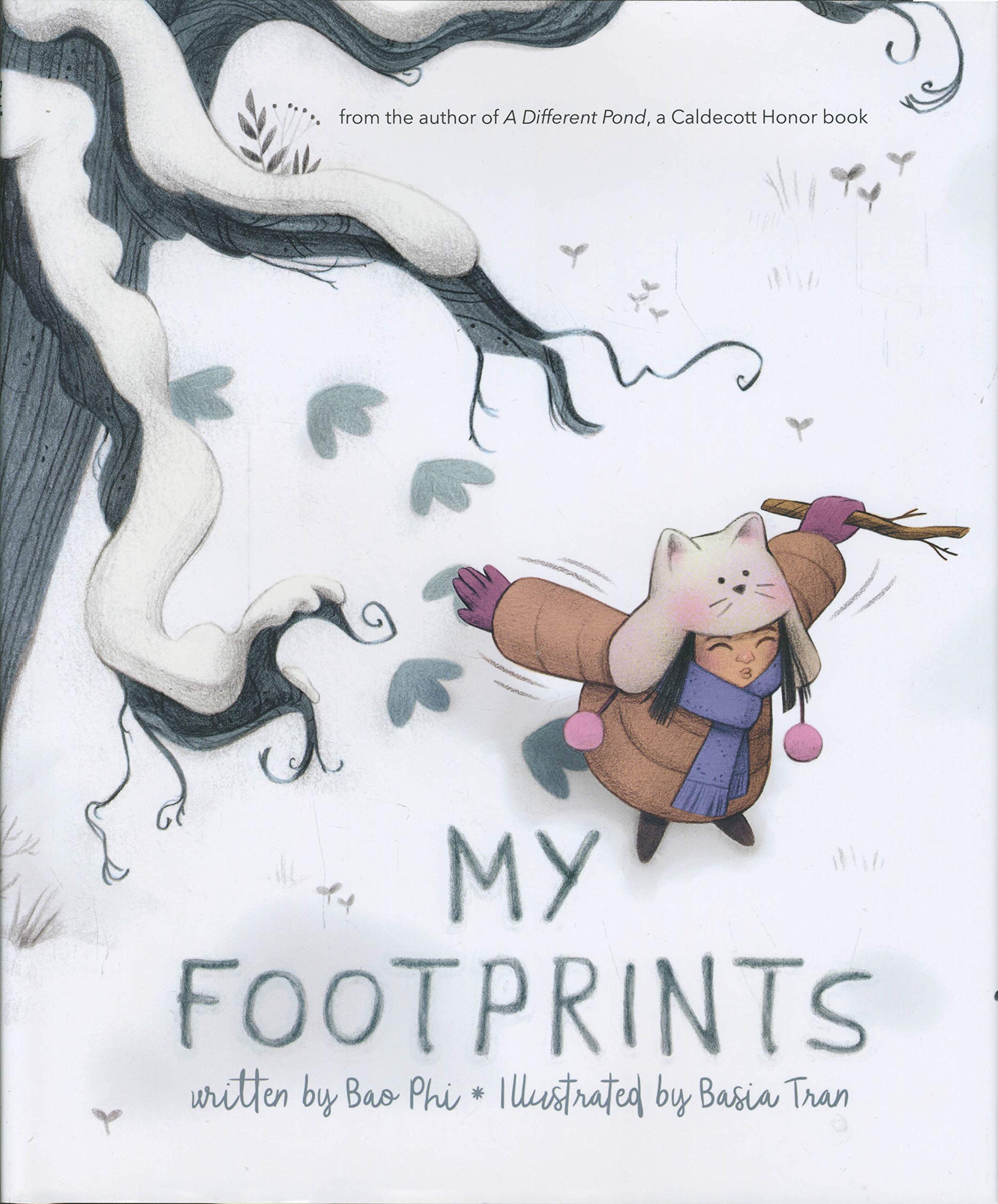
Book Review: My Footprints


Written by: Bao Phi, Illustrated by: Basia Tran
Published by: Capstone Editions, September 1, 2019
ISBN: 
978-1684460007

Plot Summary

Thuy feels different than the other kids at school. She is both Vietnamese-American and has 2 moms. The other kids at school make fun of her. On her way home, she observes different animals and alters her own footprints in the snow to look like those of the animals she sees. When she gets home, she and her moms talk about what they think the strongest animal must be.

Critical Analysis

Bullying, unfortunately, is a theme that will resonate with many people. Thuy likely feels different from the other students in her school because of her heritage. The illustrations in the book show that the other students are white, while Thuy's skin and facial features are different. This on its own could be enough to make her feel isolated, but on top of that, she also has 2 moms. It is the nature of kids to think that different equals weird or strange sometimes. This, potentially coupled with comments from other parents at the school that have been overheard by their children, lead them to taunt Thuy for her different family structure. In this way, Thuy is having to live the theme of bridging cultures, not only from her Vietnamese culture to the American one in which she lives, but also between the LGBTQ+ culture that she is a part of because of her parents, and the more "traditional" family model.

After Thuy is bullied, she walks home upset and alone. This feeling of loneliness is also one that is shared by many immigrants. Feeling torn between two worlds or like there isn't anyone who understands you and your feelings is common. Thuy's walk home is symbolic of her feelings of being alone at school since the other children are bullying her. But, it is also this time alone that allows her to closely observe the animals that are on her walk home. Her footprints change as her mood does- they start off jagged and rough, much like the feelings inside her must be.

She first sees a cardinal. It is winter and the cardinal is alone, so she asks why it isn't flying south with its friends. She thinks that the bird could fly into the sky if it was afraid. Perhaps Thuy also wishes that she had such an easy escape when things are hard at school. She models her own footprints to mimic the bird's and moves on.

Next, she passes a spot where she remembers seeing a deer once. She says that the deer looked out of place, but its family must have been close by. This is symbolic of Thuy herself. She feels out of place because of her culture and her family, but even though she may feel like she's in the wrong place or stands out too much, her family is always close by, physically and emotionally, to support her. She makes her footprints look like a deer's- "wanting to feel peaceful, quiet, left alone."

At home, her Momma Ngoc asks how school was, but Thuy doesn't want to talk about it. She decides to transform into a snow leopard who can easily hide or escape when it feels threatened. Again, these are qualities that Thuy wishes she had. She tries being a bear, who is strong, and then asks her mothers which animals they think are the strongest. Momma Arti says that many animals are strong in their own way. Thuy suggests a dragon and an elephant, and the truth comes out when she admits that she wants to be strong against the bullies at school. By talking about the strong animals, she's found an easier way to tell her moms about what is going on at school.

Momma Ngoc suggests that they play the game together because they are all stronger together. She likes the phoenix because it rises from the ashes, while Momma Arti's favorite is the Sarabha, part lion and part bird, an "unexpected combination of beautiful things." This inspires Thuy to invent her own combination in the Arti-Thuy-Ngoc-osaurus, which encapsulates all the qualities she wants (both physical and emotional). But, Thuy realizes that her family is the best "unexpected combination of beautiful things" because together they can be strong and support one another.

Review Excerpt

From Kirkus Reviews published July 1, 2019

". . . .the book sends a powerful message about the strength children can draw from their own cultural heritage. With this story about two moms joining their daughter through child-centered play to face adversity as one, Phi explains in his author's note, he hopes to nurture the marginalized and challenge "systems of harm." . . .Both a meaningful effort toward inclusion and a solid conversation starter about bullying." 

Connections

Students can use paint to make a footprint on a piece of paper and then turn it into an animal or other piece of art. 

Students can make up their own animal, like Thuy does in the book. They can combine features of other animals and create a drawing and a description of their animals. 


Book Review: Drawing From Memory


Written by: Allen Say
Published by: Scholastic Press, September 1, 2011
ISBN: 
978-0545176866

Plot Summary

Drawing From Memory is Allen Say's memoir. He starts with his life as a child and goes on to tell about how he got started as an artist. He was born in Yokohama, Japan, and lived there until World War II started. His mother gave him comic books to try to keep him inside and away from the seashore. When his city was bombed, he went with his mother and sister to live with his uncle in the country. His parents separated after the war ended and Say was sent to live with his grandmother to prepare for Middle School. She told him that if he was accepted, that she and his mother would rent him his own apartment so that he had a quiet space to study. He was accepted, but also struck out on his own to find a mentor in a local artist. He works with two other comics, honing his craft, and is also helped by teachers and students at school.

Critical Analysis

Although Drawing From Memory is the unique story of Allen Say's own life, it contains themes that are universal. Although he discovers at a young age that drawing is something that he loves to do and at which he is incredibly talented, both his father and his grandmother believe that artists are unrespectable and say that if he keeps focusing on art that he'll never amount to anything. This plays into a stereotype somewhat in portraying parents and grandparents that are strict about schooling and want their children to focus on academic, rather than artistic pursuits. However, Say does not fit the mold of the stereotypical model minority (nor would he be a minority in his native Japan). Rather than focusing only on school, when he is living on his own, he seeks out an artist to be his sensei after reading a story about him in a local paper. His mother also encourages him to follow his own dreams rather than just focusing on school.

The drawings are interspersed with photos from Say's life. Both the photos and the illustrations show that Japanese people are all uniquely different in terms of appearance. They show different facial features and skin colors. The clothing shown varies from more traditional Japanese styles to classic clothing that could have been worn in any country during the 1940s and 1950s. This juxtaposition is apparent in the picture of Say with his babysitter and the drawing of his first-grade teacher. The babysitter wears a white blouse and a pencil skirt, an outfit that could have just as easily been worn in the United States as in Japan. His teacher, Mrs. Morita, is shown in a more traditional floral dress that represents his own culture.

Some of the experiences in the book will be surprising to readers, which can inspire a discussion of whether those experiences are products of their time or of the culture. No 12-year old would have an apartment rented for them so they could focus on their studies in the United States today. However, this would also be equally unlikely in Japan in 2020. While students today may travel to boarding schools or similar, they wouldn't be sent to live on their own in either country. However, this is likely also true of the United States in the 1950s, so this will be an experience that is different to students in America today.

Near the end of the book, Say receives a letter from his father asking him to immigrate to America with his family. This is another common theme in Asian-American literature since this is one of the largest immigrant cultures in the United States. The advice that Say received is mixed- with some saying of course he should go, and others asking why he would even want to. His mother tells him that he can make the decision himself. He does end up deciding to continue his adventure with his father in America. Although the book ends when he leaves Japan, it is obvious that Say himself has mixed feelings about his choice. He is excited for a new chapter, but still sad to leave his homeland behind.

Awards Won

2011- Booklist Editors' Choice: Books for Youth

Review Excerpt

From School Library Journal published December 27, 2011

"Praise to the writing, by the way. It’s all well and good to create an illustrated narrative like the one we’ve found here but another thing entirely to write it in such a way where the words and pictures are quite so inseparable. Drawing from Memory is a brilliant example of a book where the words and the images heighten the reading experience. There is a belief amongst parents that graphic novels are a kind of lesser form of literature because there is something about the use of images with words that, when combined, renders both weaker. To people who feel that way I would hand them Say’s memoir. His is a brilliant mixing and melding of the two art forms. And while the pictures, photographs, and cartoons tell a moment in a life well, his words really steal the show." 

Connections

Listen to the "Meet the Author" recording with Allen Say at https://www.teachingbooks.net/book_reading.cgi?id=7268

Read other books by Allen Say, such as Tree of CranesUnder the Cherry Blossom TreeTea with Milk, or Erika-San.


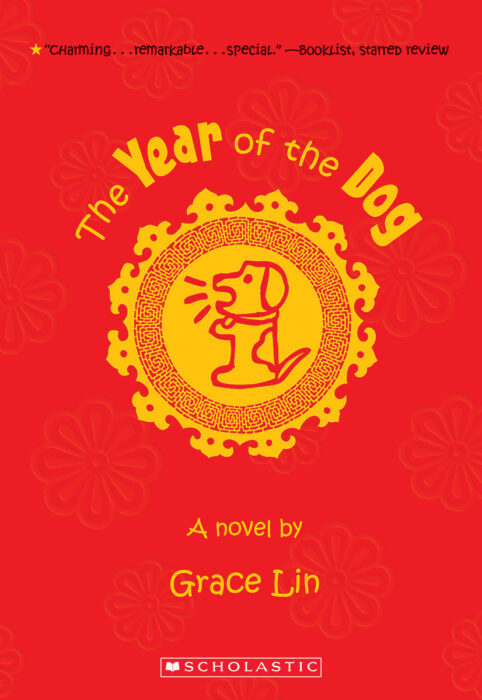
Book Review: The Year of the Dog


Written by: Grace Lin
Published by: Little, Brown Books for Readers, May 2, 2007
ISBN: 
978-0316060028

Plot Summary

The Year of the Dog tells the story of a year in Grace (Pacy) Lin's life. Grace lives in upstate New York with her parents and her two sisters. The book opens with the family preparing for Lunar New Year celebrations. Grace's parents explain that the Year of the Dog is a year to find yourself. This starts Grace off on a journey to do just that. She makes a new best friend in Melody, another Taiwanese girl who is new at her school. Together, Grace and Melody participate in activities at school and try to find themselves.

Critical Analysis

The Year of the Dog weaves together Grace's present-day life with tales of her mother and grandparents as children. This structure helps to show the differences between their lives in Taiwan and her own life in New York. The book starts and ends with a Chinese New Year celebration, which showcases an important holiday in their culture, as well as serving as an opportunity to discuss important foods and traditions.

Lin's story includes the theme of the 1.5 Generation, which is prevalent in Asian American literature. Although her parents are immigrants from Taiwan, she has only known life in the USA. Her two worlds are constantly in competition with one another. This is apparent when she meets Melody at school. Melody asks Grace if she is Pacy and Grace responds that she is. However, Becky, her white friend, says that Pacy is not her name. Grace has to explain that Grace was her name at school but that her mother calls her Pacy. In a vignette at the end of a chapter, she explains how her name changed from Pacy to Grace. A teacher told her she was "too big" to go by Pacy Lin, and called her the name on the roll sheet, Grace. Her older sister, Lissy, explains on the bus that they have both Taiwanese and American names and that she should let the teacher and kids at school call her Grace so that it will be easier and they won't ask so many questions about her name. This is an experience that many people with names that are inspired by other cultures have had. The desire to fit in and go by their American names so that they won't be bombarded with questions is a feeling that many share. The teacher's reaction also shows some ignorance about Grace's culture, assuming that her Chinese name is a nickname when it is her given name, and encouraging her to go by the name on the roll sheet.

Although Grace's family has Chinese names and celebrates the traditions of their culture, they also participate in American traditions as well. She tells about how she and her sisters insist on having turkey at Thanksgiving, even though her parents don't like it. They end up with a table full of traditional Chinese dishes and the smallest turkey her mother can find, a compromise between the culture of their ancestors and her parents original home and the culture of their current home.

There are also times when Grace's acceptance of her life in the US is seen as a detriment by others in the Taiwanese community. She and her family attend a Taiwanese-American Convention with Melody's family. The first week is fun for Grace but after that, Melody leaves to visit her aunt and Grace's mother enrolls her in an art class with other girls. When the girls discover that she's not able to speak Taiwanese or Chinese, they judge her, saying that she's been "Americanized" and call her a Twinkie, a racial slur term that is insensitive.

Earlier in the book, when Grace told a friend at school that she wanted to try out for the part of Dorothy in the school play, the girl told her that she couldn't because Dorothy wasn't Chinese. This upsets her so much that she decides not to try out, even though she'd already signed up. The contrast and similarities of these two experiences accurately portray what the experience of living in America can be like for Asian-Americans. They can be seen as "too foreign" for white Americans and "too American" for other Asian-Americans. This also ties into the recurring theme of physical differences in Asian-American literature. Because of their different facial features, people can immediately tell that a person is Asian, which can lead to stereotyping.

Awards Won

2006- ALA Children's Notable
2006- Asian Pacific American Librarian Association Honor Book

Review Excerpt

From Publishers Weekly, published January 2, 2006

"Lin creates an endearing protagonist, realistically dealing with universal emotions and situations. The well-structured story, divided into 29 brief chapters, introduces traditional customs (e.g., Hong Bao are special red envelopes with money in them, given as New Year's presents), culture and cuisine, and includes several apropos "flashback" anecdotes, mainly from Pacy's mother. The book's inviting design suggests a journal, and features childlike spot illustrations and a typeface with a hand-lettered quality. Girls everywhere, but especially those in the Asian-American community, will find much to embrace here.

Connections

Read The Year of the Rat and Dumpling Days, other books in the Pacy Lin series.  

Have students compare a Chinese calendar with a western calendar to discover what year they were born in. They can look up facts about that year. 


Sunday, November 1, 2020

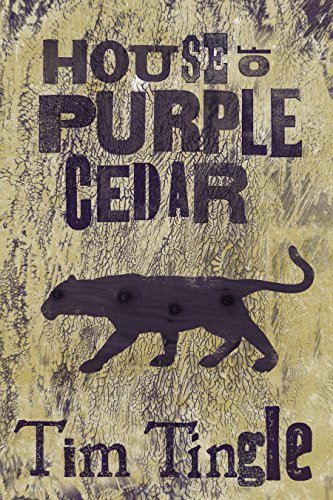
Book Review: The House of Purple Cedar


Written by: Tim Tingle
Published by: Cinco Puntos Press, January 14, 2014
ISBN: 
978-1-935955-69-6

Plot Summary

Rose is the narrator and one of the main characters of House of Purple Cedar. As an old woman nearing death in 1967, she tells the story of growing up in Skullyville and of the events that occurred there around the turn of the century. Both the Choctaw people as well as the white citizens living in this small Oklahoma town are wary of the local marshall, Hardwicke, who is a known alcoholic. Rose begins with the story of her school, The New Hope Academy, burning down, which resulted in the deaths of 20 Choctaw girls, including her friend, Lillie Chukma, who was deaf and couldn't hear the calls to evacuate. Rose goes on to tell about her grandpa, Amafo's beating by the local marshall, which begins a series of events that effect the lives of many citizens of Skullyville.

Critical Analysis

As the person telling the story, Rose can be seen as the main character. However, the book often focuses on the other characters and Rose covers their stories almost as an omniscient narrator. Amafo's interaction with the marshall and his decision to not only forgive him but also to ensure that he is seen in the town having a positive interaction with him speaks to the type of person he is. His relationship with Pokoni is apparent not only through the way they treat each other while Pokoni is living, but also in the way that he seems to still depend on her even after her death.

Maggie is another strong character in the story who is introduced through her interaction with Amafo. She already does not have a positive opinion of the marshall, but his treatment of Amafo seems to solidify that negative opinion of him in her mind. She is aware of his cruelty, and thus know that even though Terrance poses no actual threat that Marshall Hardwicke will execute him, perhaps our of cruelty more than anything else. This, along with her immediate feelings towards Terrance leads her to act out of character. After being a dependable citizen and employee for many years, she breaks Terrance out of jail by using what she knows about the marshall against him. Although Maggie and Terrance are more minor characters, the inclusion of their stories adds humor and adventure to the book's plot.

The setting of the story takes center stage at times, when Rose describes the woods that surround their community. The woods give predators the perfect place to hide and observe their prey. This is true both of animals, but also of white men, both when they attempt to sneak up on Mingo and the children after Amafo is attacked, and when Marshall Hardwicke pursues Roberta Jean, thinking that she is Rose.

The book contains the language and cultural norms of the Choctaw people. This is apparent when, after Amafo's attack, all the members of the tribe arrive at Rose's house to discuss their next steps as a group. This is indicative of the communal nature of their tribe and how they are acting as a group rather than as individuals. There is also an interesting combination of their culture with the Christian religion to which they have been indoctrinated. The pastor of their church is a member of the Choctaw nation, but preaches Christian messages and baptizes the children. This is an experience that shows that these cultures can be intertwined and that being Choctaw and being Christian are not mutually exclusive. Of course,not all members of the Choctaw nation chose to become Christian and likely either held more traditional religious beliefs or none at all.

The climax of the book combines Rose and her family's trip home from their friends' house with the return of Marshall Hardwicke, who previously faked his own death. One is uncertain if the thing that is following Rose's family home is indeed a panther or Hardwicke himself. This creates a lot of tension and makes the moment of truth very dramatic when the reader discovers that it is actually a panther that has been watching them. An even bigger surprise occurs when the panther traps Rose, but does not harm her. Rose believes that the panther is her Pokoni, who has come back to watch over her. This belief is solidified when she sees her Amafo interact with the panther later that night.

Marshall Hardwicke does return that night, but to his own home rather than to Rose's. His long-suffering wife has finally come into her own and has grown into a stronger person after hearing of his supposed death. The book ends with a satisfying result for her, which is well-deserved after a hard life.

Awards Won

2016- American Indian Library Association Youth Literature Award (Young Adult Category)

Review Excerpt

From Kirkus Reviews, published October 20, 2013

"In quiet, often poetic language drawn from nature’s images and from Choctaw ethos, Tingle sketches Amafo, a marvelous character both wise and loving. Tingle writes of cultures clashing, certainly, but hatred from nahullos (whites) like Hardwicke is counterbalanced by the goodwill of others like John Burleson, railroad stationmaster, and one-legged store clerk Maggie Johnston. Despite assimilating elements of white culture, including Christianity, Tingle’s Choctaws maintain mystical connections to the land and its creatures. The tale is ripe with symbolism and peopled by riveting characters.
A lyrical, touching tale of love and family, compassion and forgiveness.


Connections

Read other books by Tim Tingle: How I Became a Ghost, Crossing Bok Chitto, or Stone River Crossing are suggestions. 

Define the Choctaw words used throughout the story. Discuss the effect that the use of these words have on the story. 

Book Review: Fry Bread


Written by: Kevin Noble Maillard; Illustrated by: Juana Martinez-Neal
Published by: Roaring Brook Press, 2019
ISBN: 
978-1626727465

Plot Summary

On the surface, Fry Bread is a story about a family making a traditional dish. However, this book has a much deeper meaning than that. Fry bread is a dish that is made by numerous Native American tribes and is symbolic of their culture and the struggles that they have endured. The book takes readers on a multi-sensory journey that describes how fry bread looks, sounds, and tastes, along with all the things it represents beyond food.

Critical Analysis

Fry Bread certainly a book about the traditional Native dish, but is also about so much more. Fry bread is thought to have originated from a food shortage that many tribes experienced as a result of government rationing. Maillard includes extensive notes at the end of the book, which add to the authenticity of the story. Maillard's own ethnicity is made up of both Native American and African American cultures, so as a member of the Seminole Nation, he is writing as an insider and is well-poised to speak on the traditions and issues of Native Americans.

The illustrations add so much depth and warmth to the book. It is obvious that the characters in the book are all Native Americans, but they are not all carbon copies of one another. Martinez-Neal incorporates features from many different tribes found around the country, giving the characters facial features, skin tones, and hair textures that are accurate for their tribe. The illustration for "Fry bread is place" shows the book's characters in locations on a map representing the homes of their ancestors (and possibly their own homes). This is the perfect way to represent the fact that Native Americans are not a cultural monolith. The term describes many different people living in different parts of the country who look completely different from one another. However, the fact that fry bread is one thing that ties them all together indicates that they do share some unique experiences, unfortunately, many of which may be negative interactions with the United States government, which led to the necessity of fry bread.

Although fry bread had somewhat of a depressing start, its transformation into a symbol of the Native culture represents their resilience and determination. In a Q&A with Publishers Weekly, Maillard states that he chose to write about fry bread because it was something that was so central not only to his own family, but to many native families. He mentions how time-consuming it is to make, which is mirrored in the words "Fry bread is time". This shows not only that the bread takes a long time to make, but also that it is time that is spent together with family making lasting memories.

Since fry bread is a basic recipe, it can be combined with many other foods to make dishes. Maillard writes "Fry bread is flavor" and lists several different foods that are combined with fry bread to make meals. This again represents the fact that while fry bread is something that many Native people have in common, each tribe uses it in their own unique way, combining it with other foods that are local to them. This reiterates that while Native Americans do have some shared experiences, they are not all the same.

More of the Native American culture is depicted throughout the book. Traditional art is showcased on the "Fry bread is art" page where the illustrations include both woven baskets and handmade dolls. Maillard explains that both of these are traditional to the Seminole people and discusses their significance and history at the end of the book. Including the background behind the crafts adds so much depth to the story and shows that Native art is very meaningful to the people.

Fry bread is a strong part of the history of the Native American people and represents so many other aspects of their culture. The pain and struggle that they endured at the hands of white settlers is manifested through fry bread, but so is their ability to build from what they had and overcome their hardships. It represents the people themselves as well. The front and end pages display the names of many of the tribes that make fry bread and live today in the United States. Being able to see all the different groups listed out that way shows just how many there are and again, even though they have some things in common, they are all their own unique people as well.

Awards Won

2020- Robert F. Sibert Award
2020- American Indian Youth Literature Award Honor Book (Best Picture Book)

Review Excerpt

From The Hornbook, published November 25, 2019

"This affectionate picture book depicts an intergenerational group of Native American family members and friends as they make fry bread together. The text begins: “Fry bread is food / Flour, salt, water / Cornmeal, baking powder / perhaps milk, maybe sugar.” On subsequent pages we learn that “Fry bread is shape…sound…color,” etc.; and through the refrain “Fry bread is…” readers learn that the food staple, although common to many Native American homes, is as varied as the people who make it and the places where it is made. This diversity, too, is reflected in Martinez-Neal’s warmhearted acrylic, colored-pencil, and graphite illustrations, on hand-textured paper, in which the characters within Native American communities have varying skin tones and hair texture.

Connections

Make fry bread at home, and bring it in for students to taste. Consider creating a video so students can see the process and hear the sounds that Maillard discusses in the story. 

Have students research which tribes lived on the land where their school is.

Book review: Firefly July

  Selected by: Paul B. Janeczko Illustrated by: Melissa Sweet Published by: Turtleback Books, April 10, 2018 ISBN: 978-0606409025 Plot Summa...