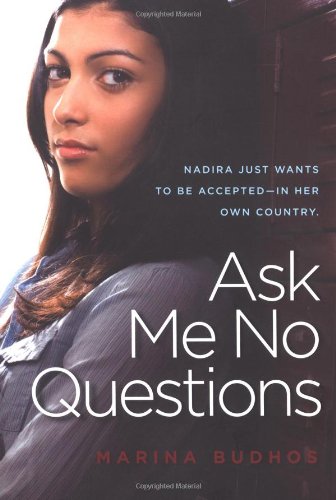
Written by: Marina Budhos
Published by: Ginee Seo Books, February 1, 2006
ISBN: 978-1416949206
Plot Summary
Nadira and her family have lived in New York City for years, having immigrated from Bangladesh and overstayed their original visas. They've managed to quietly blend in at school and in the city, but following the events of 9/11, that becomes more difficult. Both public backlash as well as new laws and registration requirements lead her parents to make the difficult decision to drive to the Canadian border to apply for asylum. However, when they get there, they are told that the Canadian government is overwhelmed with applications and are directed to turn around and go back. Nadira's father is arrested at the border, leading her mother to stay in a shelter to be near him and her sister, Aisha, and her to return to their previous lives and attempt to retain some semblance of normalcy while they worry about their father and their futures.
Critical Analysis
The experience of immigrants in the United States is a major theme in Middle Eastern literature for Children and Young Adults. Ask Me No Questions takes on this topic through the eyes of Nadira and her family, who are immigrants from Bangladesh. They have lived in the United States for 8 years and Nadira has trouble even remembering their life in Bangladesh before that. However, due to a change in the laws following 9/11, they seek asylum in Canada to avoid her father having to register and be caught with an expired visa. After 9/11, many immigrants from the Middle East were judged and maligned by the country that many of them had thought of as home for years.
Nadira and her family as characters are well fleshed out and while they definitely retain some typical aspects of their cultures, they are far from being mere stereotypes. Her Abba supports both Nadira and her sister Aisha in their education and encourages them both to chase their dreams, even going so far as to invest the little extra money he had in a savings account through their mosque. This very normal American thing- saving for your child's college- becomes an issue for his immigration case when the government believes that he was contributing to a fund for terrorists instead. This points to the assumptions that were frequently made about people of Muslim faith after 9/11. Because the way that Abba chose to save money for his daughters was through his mosque, a place he trusted, rather than a bank, as most white Americans would do, the Immigration Office assumed that it was something much more sinister.
Although Abba has more modern ideas about his daughter, Nadira's uncle is shown in a more stereotypical light with more traditional views about women. Her cousin, Taslima, is dating a white man, wears clothing of which her parents' do not approve, and ends up leaving college to join a group of people working to help immigrants. Rather than thinking of her as a strong woman, she is seen as disobedient, like a child. And although her boyfriend (and then husband), frequently assists her family in navigating the difficult immigration system, her parents still do not like that he is white.
Nadira's family does retain some traditional elements of their Bangladeshi culture. Her parents and her aunt and uncle wear traditional dress and they generally eat foods based on their cultural background at home. However, Nadira does not wear a head covering because she wants to fit in with her classmates. She also has an appetite for Western food that is shown through her choices in the book. When her father is detained, her mother decides to stay at a shelter near him so that she can attend his hearings. Before her daughters return home, she insists upon buying a new coat from the Salvation Army so that she "looks right" for the hearings. The coat she chooses is one that she thinks looks like Jackie Kennedy. This statement shows that Ma realizes that when she shows up in court, it would help her husband if she looks as "American" as possible and she will need the proper coat to cover up her more traditional clothing.
Although Aisha is described as the smart daughter throughout the book, she loses hope and seems to slide into a depression during the time her father is detained. This is understandable since she is a high school senior and sees her dreams of being valedictorian and attending college slipping away. Her friends at school are also BIPOC girls, some of whom are also immigrants, but none of them are there on an expired Visa, and Aisha never shares her true situation with her friends. As they talk about their plans, she distances herself from them and ends up self-sabotaging when she skips out on a college interview.
Nadira, who has always looked down on herself ends up growing throughout the book and steps into the hole that her sister has left as the leader of the family. She considers purchasing illegal documents from a boy in the neighborhood, but can't go through with it. Instead, she attends the hearing and proves that her father was just saving for their college and that they had his name spelled incorrectly on his paperwork, confusing him with other men who had similar names. This not only shows Nadira's growth but is an example of the attitudes of white Americans towards people from the Middle East.
Awards Won
2007- ALA's Best Books for Young Adults
Review Excerpt
From Publishers Weekly published February 6, 2006
"As Budhos's provocative novel opens, 14-year-old narrator Nadira Hossain and her family are heading north to Canada, seeking asylum from the harassment that has become routine in the U.S. in the wake of 9/11. The family left Bangladesh for America eight years ago on a tourist visa and stayed; the first lawyer they hired to make them legal citizens was a fraud, the second was unsuccessful. At Flushing High in Queens, with a large population of immigrant students, the "policy" is "Ask me no questions," according to Nadira. But just as her sister, Aisha, is interviewing at colleges like Barnard, with a shot at valedictorian, the questions start coming hard and fast to the people of their community—some of whom disappear in the night with immigration officers, detained for months before being deported. In a desperate move, the Hossains travel to Canada, where they are turned away; their father, Abba, is placed in a U.S. jail cell at the border, their mother remains in a shelter nearby, and the girls return to Queens to stay with their aunt and uncle. The message drives the story here; the motivations of the characters are not always clear, and the ending may strike some as a bit tidy. But the events of the novel are powerful enough to engage readers' attention and will make them pause to consider the effects of a legal practice that preys on prejudice and fear."
Connections
Discuss the events of 9/11 with students and talk about how attitudes towards immigrants from Middle Eastern countries changed after the tragedy.
Read and discuss this entry on the author's blog: https://marinabudhos.com/blog/talk-to-me.




No comments:
Post a Comment